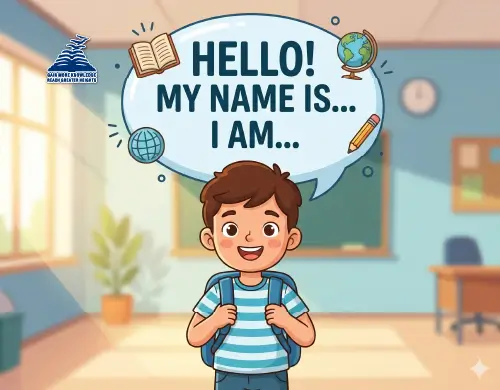
Speaking about oneself in front of classmates, teachers, or a group can feel difficult at first. Many students feel nervous because they are unsure what to say, how to begin, or how long they should speak. Learning self-introduction in English helps students express themselves clearly, confidently, and politely in school and everyday situations.
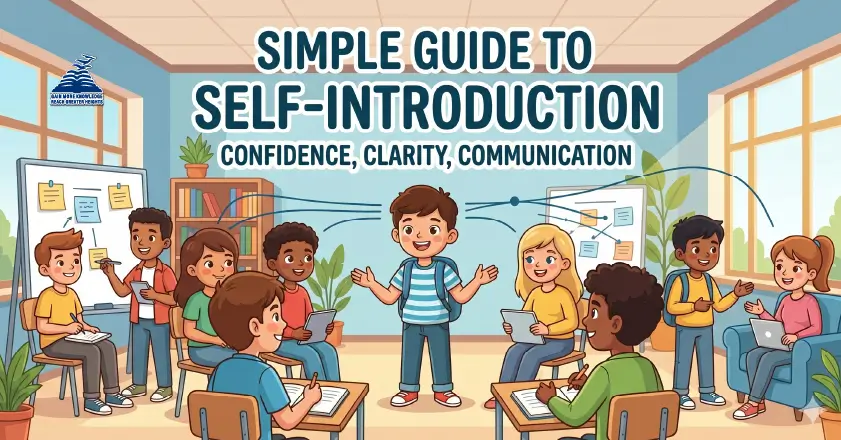
What Is a Self-Introduction?
A self-introduction is a short speech where a person shares basic details about themselves. For students, it usually includes their name, class, school, hobbies, interests, strengths, and goals. When students learn to Introduce Yourself in English, they become more comfortable speaking in front of others and presenting their identity in a simple way.
Why Self-Introduction Is Important for Students
Self-introduction is important because it helps students build confidence, improve communication skills, and create a good first impression. The importance of self-introduction can be seen during classroom activities, competitions, interviews, group discussions, and school events. A confident introduction also helps students connect better with teachers and classmates.
Basic Structure of a Good Self-Introduction
A good self-introduction should be short, clear, and organised. Students can begin with greetings, then share their name, class, school, hobbies, strengths, and one goal. A good self-introduction does not need difficult words. It should sound natural, polite, and easy to understand.
Basic structure students can follow:
- Greeting
- Name
- Class and school
- Hobbies or interests
- Strengths
- Future goal
- Thank you
How to Start Your Self-Introduction Confidently
The beginning of a self-introduction is very important because it sets the tone for the speech. Students can start with simple lines such as “Good morning, everyone” or “Good afternoon respected teacher and my dear friends.” A clear start helps students deliver a Self-Introduction Speech in English with more confidence and less hesitation.
What Details Students Should Include
Students should include only relevant and simple details. They can talk about their name, age, class, favourite subject, hobbies, family, ambition, and positive qualities. A well-prepared Self Introduction for Students should not be too long or too short. It should give listeners a clear idea about the student in a friendly way.
| Detail to Include | Example |
| Greeting | Good morning, everyone |
| Name | My name is Rohan |
| Class | I study in Grade 5 |
| Hobby | I enjoy reading and drawing |
| Strength | I am hardworking and curious |
| Goal | I want to become a doctor |
| Ending | Thank you |
Simple Self-Introduction Format for School Students
A simple format makes speaking easier for beginners. Students can memorise the structure first and then practise speaking naturally. A Simple Self Introduction in English should sound polite, confident, and clear, without using complicated sentences.
Simple format:
Good morning everyone.
My name is __________.
I am studying in Grade __________.
My school name is __________.
My favourite subject is __________.
My hobbies are __________.
I am interested in __________.
My goal is to become __________.
Thank you.
Self-Introduction Examples for Beginners
Beginners can start with short and easy examples. A student self introduction should be suitable for the child’s age and class level. Younger students can keep it simple, while older students can add strengths, achievements, and ambitions.
Example 1: For Primary Students
Good morning everyone. My name is Ananya. I study in Grade 3. My favourite subject is English. I like drawing, reading stories, and playing with my friends. I am a cheerful and helpful student. Thank you.
Example 2: For Middle School Students
Good morning respected teacher and my dear friends. My name is Arjun. I study in Grade 7. I enjoy learning Science and Mathematics. My hobbies are reading books, playing cricket, and solving puzzles. I want to improve my speaking skills and become more confident. Thank you.
Example 3: For High School Students
Good morning everyone. My name is Meera. I am a student of Grade 10. I am interested in Science, technology, and public speaking. My strengths are discipline, curiosity, and hard work. My goal is to choose a career where I can learn, grow, and contribute meaningfully. Thank you.
Tips to Speak Clearly and Confidently in English
Students can improve their speaking skills through regular practice. They should speak slowly, maintain eye contact, stand straight, and avoid rushing. In many of the best CBSE schools in Bangalore, students are encouraged to take part in speaking activities so they can develop confidence from a young age.
Helpful speaking tips:
- Practise in front of a mirror
- Speak slowly and clearly
- Use simple English words
- Maintain a pleasant expression
- Avoid memorising without understanding
- Take a deep breath before speaking
Common Mistakes to Avoid During Self-Introduction
Students sometimes speak too fast, forget important details, use very difficult words, or become too nervous. They may also make the introduction too long. Teachers in top schools in Bangalore often guide students to keep their introduction simple, organised, and confident instead of trying to sound overly formal.
| Common Mistake | Better Approach |
| Speaking too fast | Speak slowly and clearly |
| Using difficult words | Use simple sentences |
| Looking down | Maintain gentle eye contact |
| Forgetting the order | Follow a basic format |
| Speaking too long | Keep it short and relevant |
How to Practise Self-Introduction at Home
Practice at home helps students become more confident before speaking in class. Parents can ask children to introduce themselves during family time, record their speech, or practise in front of a mirror. Regular practice makes classroom student self-introduction easier and more natural.
Building Confidence Through Regular Speaking Practice
Confidence grows when students speak often. They can practise by reading aloud, telling short stories, answering simple questions, and participating in classroom discussions. Over time, they become more comfortable with English speaking and learn how to express their thoughts clearly.
Helping Students Introduce Themselves with Confidence
Learning self-introduction in English is an important step in helping students speak clearly, confidently, and politely in school and everyday situations. At Presidency School Bangalore South, students are encouraged to develop strong communication skills through classroom activities, speaking practice, presentations, and interactive learning. A good self-introduction helps children share their name, class, interests, strengths, and goals in a simple and organised way while building confidence to speak in front of others.
With supportive teacher guidance and a nurturing learning environment, Presidency School Bangalore South helps students express themselves with clarity, improve their English fluency, and develop the confidence needed for academic and personal success.
Conclusion
Self-introduction is an important communication skill that helps students speak about themselves with confidence, clarity, and politeness. By following a simple structure, using easy English sentences, and practising regularly, students can overcome nervousness and introduce themselves naturally in classrooms, events, interviews, and everyday situations. A good self-introduction not only creates a positive first impression but also improves speaking skills, self-confidence, and personal expression.
With encouragement from parents and teachers, students can learn to present themselves with ease and build strong communication skills that support their academic and personal growth. Self-introduction becomes easy when students follow a simple format and practise regularly. With clear words, confidence, and a positive attitude, every student can introduce themselves well in English.