Mobile phones have become a common part of student life. Children use them for online classes, homework help, videos, games, messages, and entertainment. While phones can support learning when used correctly, the Harmful Effects of Mobile Phones become a concern when children spend too much time on screens without proper guidance, limits, or supervision from parents.
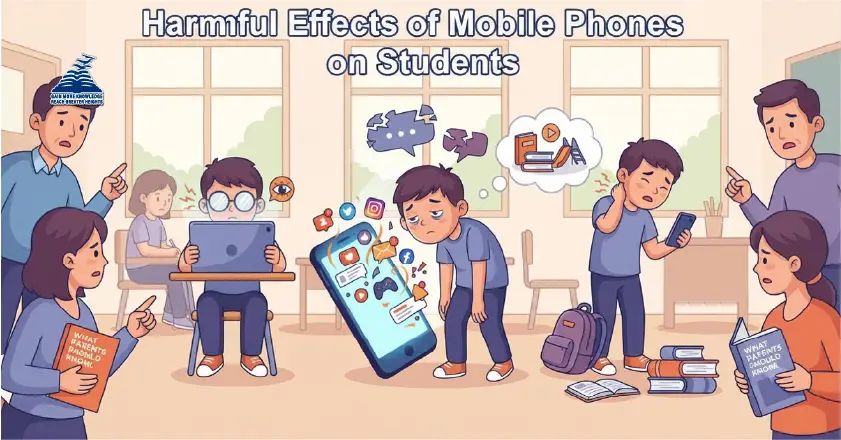
How Mobile Addiction effects kids?
The disadvantages of mobile phones are not always visible immediately. A child may slowly lose interest in reading, outdoor play, family conversations, or focused study time. Parents should understand that mobile phones are not harmful by themselves, but uncontrolled and excessive use can affect learning, health, behaviour, sleep, and emotional well-being.
Understanding Mobile Phone Use Among Students Today
Students today use mobile phones for both academic and non-academic purposes. They may attend online classes, watch educational videos, search for information, or complete assignments. At the same time, they may also spend long hours on games, reels, social media, chatting, and random browsing. This makes it important for parents to know how much screen time is useful and how much is becoming unhealthy.
Why Excessive Screen Time Is a Growing Concern
Excessive mobile phone use can disturb a child’s daily routine. When students spend too much time on screens, they may avoid studies, delay homework, sleep late, eat while watching videos, and reduce physical activity. Over time, this can affect discipline and create unhealthy habits that become difficult to change.
Impact of Mobile Phones on Focus and Concentration
The impact of mobile phones on students is clearly seen in attention and concentration. Notifications, games, videos, and social media updates can interrupt study time. Even a short break to check the phone can make it harder for students to return to focused learning. This affects memory, understanding, and completion of schoolwork.
How Mobile Use Affects Sleep and Daily Routine
Late-night phone use is one of the biggest concerns for students. Watching videos, chatting, or playing games before bed can delay sleep and make children feel tired the next morning. Poor sleep affects mood, attention, learning speed, and classroom participation. Parents should avoid allowing phones in the bedroom during sleep time.
Effects on Academic Performance and Study Habits
The negative effects of mobile phones can reflect in academic performance when students become dependent on quick answers, videos, or shortcuts instead of understanding concepts. They may rush homework, copy information without learning, or lose patience for reading textbooks. Good study habits need quiet time, concentration, and regular practice.
Social Media, Distraction, and Mental Well-Being
Social media can affect students emotionally when they compare themselves with others, worry about likes, or feel pressured to stay online. Some children may become anxious if they miss messages or updates. Constant scrolling can also reduce patience and make normal activities feel boring. Parents should observe changes in mood, confidence, and behaviour.
Physical Health Concerns: Eye Strain, Posture, and Fatigue
The Side Effects of Mobile Phone Use can include eye strain, headache, neck pain, poor posture, and tiredness. Many children bend their neck for long periods while using phones. Sitting in one position for too long can reduce movement and cause body discomfort. Regular breaks, proper sitting posture, and outdoor play are important.
Risk of Mobile Addiction and Reduced Self-Control
Mobile phone addiction can happen when a child feels restless, angry, or upset without the phone. Some children may hide phone use, refuse to stop playing games, or lose interest in other activities. Parents should notice warning signs early and set clear, calm, and consistent rules before phone use becomes a serious habit.
Impact on Communication and Family Relationships
When children spend too much time on phones, family communication may reduce. They may answer briefly, avoid conversations, or prefer screens over people. Mealtimes, travel time, and evenings at home should include screen-free moments where children talk, share, and connect with parents and siblings.
Cyber Safety Risks Every Parent Should Know
Students may not always understand online risks. They can be exposed to strangers, harmful content, cyberbullying, fake links, online scams, privacy issues, or unsafe downloads. Parents must teach children not to share personal details, photos, passwords, school information, or location with unknown people online.
Healthy Mobile Phone Rules for Students at Home
In the best CBSE schools in South Bangalore, students are often encouraged to balance technology with reading, sports, creativity, and social interaction. Parents can follow the same approach at home by setting simple phone rules.
| Concern | Healthy Rule for Parents |
| Late-night use | Keep phones away before bedtime |
| Study distraction | No phone during homework unless needed |
| Social media overuse | Fix limited screen time |
| Poor posture | Encourage breaks and proper sitting |
| Online safety | Monitor apps and privacy settings |
| Family disconnect | Keep meals screen-free |
Helping Children Use Technology Responsibly and Safely
The top CBSE schools in Bangalore understand that children need digital skills, but they also need discipline. Parents should not only ban phones suddenly, but explain why limits are needed. Children are more likely to cooperate when they understand that rules protect their health, studies, sleep, and safety.
Mobile Phone Rules for Younger Children
The best play schools in Bangalore usually focus on play-based learning, movement, stories, rhymes, art, and social development. Younger children should have very limited screen time because they need more hands-on learning, outdoor play, conversation, and physical activity for healthy growth.
Building Responsible Digital Habits in Students
Many good CBSE schools in Bangalore promote responsible technology use through awareness sessions, classroom rules, and balanced learning methods. At home, parents can support this by guiding children to use phones for learning, creativity, communication, and research instead of endless entertainment.
Practical Tips for Parents
Parents can help children develop healthier mobile habits with small but steady changes.
- Set a fixed screen time routine
- Avoid phones during meals and homework
- Keep phones outside the bedroom at night
- Encourage reading, sports, music, and hobbies
- Use parental controls where needed
- Talk openly about online safety
- Be a good role model with your own phone use
- Appreciate children when they follow rules
Harmful Effects of Mobile Phones on Students: What Every Parent at Presidency School Bangalore South Should Know
In today’s digitally saturated world, excessive mobile phone usage among students has emerged as a growing concern for parents and educators alike, and Presidency School Bangalore South remains deeply committed to helping families understand and address this critical issue with clarity, care, and practical guidance.
Prolonged screen exposure can adversely affect children’s attention span, sleep patterns, eyesight, and academic focus, while also increasing risks of social withdrawal, anxiety, and reduced face-to-face communication skills essential for holistic development. Recognizing these challenges, Presidency School Bangalore South actively promotes digital wellness through structured screen-time awareness programs, mindful technology use workshops, and open dialogue between teachers, parents, and students.
The school’s balanced approach encourages outdoor play, creative pursuits, and real-world social interaction as healthy alternatives that strengthen concentration, emotional wellbeing, and interpersonal skills. Regular parent-teacher sessions further equip families with practical strategies to set healthy digital boundaries at home.
For parents in Bangalore South seeking a school that genuinely prioritizes their child’s mental, physical, and academic wellbeing in an increasingly screen-driven world, Presidency School Bangalore South stands as the most responsible, informed, and trusted educational partner today.
Conclusion
Mobile phones are useful tools when used with care, but excessive and uncontrolled use can affect students’ focus, sleep, health, academics, behaviour, and relationships. Parents play an important role in helping children build safe and balanced digital habits. With clear rules, open communication, regular monitoring, and healthy alternatives, students can learn to use technology responsibly without allowing it to control their daily life.