Learning vocabulary becomes easier when students understand how words are connected to each other. One of the simplest and most effective ways to build English vocabulary is by learning opposite words, also known as antonyms. For young learners, Opposite Words in English help them understand meanings clearly, improve sentence formation, and express ideas with confidence. Many top CBSE schools in Bangalore introduce antonyms through fun classroom activities, reading exercises, flashcards, games, and daily conversation practice so that students enjoy learning language naturally.
What Are Opposite Words in English?
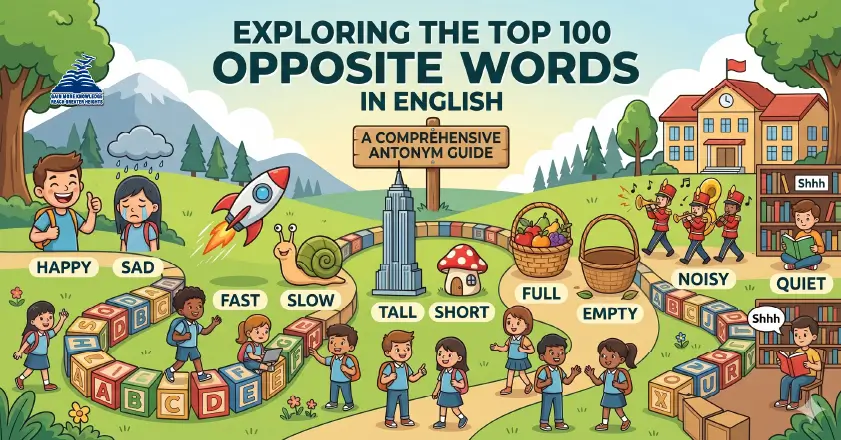
To understand what are opposite words, students must first know that opposite words are pairs of words with completely different meanings. For example, “hot” and “cold,” “big” and “small,” “happy” and “sad,” and “day” and “night” are opposite words. These words help children compare people, places, objects, actions, and feelings. When students learn opposites, they begin to understand how language works in real-life situations.
Why Learning Antonyms Improves Vocabulary
Learning antonyms is important because it helps students expand their word knowledge quickly. When a child learns one word along with its opposite, vocabulary growth becomes faster and more meaningful. For example, learning “tall” along with “short” helps students understand both words better. This is why opposite words in English are often taught in primary classes to improve reading, speaking, and writing skills from an early age.
Common Opposite Words Used in Daily Conversations
Opposite words are used in everyday conversations more often than students realise. Words like “open-close,” “come-go,” “near-far,” “clean-dirty,” and “early-late” are part of daily life. When children understand these words, they can describe situations more clearly. For example, they can say, “The door is open,” or “The door is closed.” This makes communication simple, accurate, and confident.
Easy Opposite Words for Primary School Students
Primary school students can begin with simple and familiar antonyms. Words such as “up-down,” “in-out,” “yes-no,” “good-bad,” “old-new,” and “fast-slow” are easy to remember because children see them in daily activities. Teaching basic opposites through actions, pictures, and classroom games helps young learners remember them better and use them naturally while speaking and writing.
Important Opposite Words for Reading and Writing
Opposite words play a major role in improving reading and writing skills. When students read stories, poems, or textbook lessons, they often come across words that show contrast. Understanding opposites helps them follow the meaning of sentences more clearly. For writing, antonyms help students make better descriptions, comparisons, and creative sentences. This is one reason why opposite words important for every student’s language development.
Opposite Words That Help Improve Sentence Formation
Students who know antonyms can form better sentences with clarity and variety. For example, instead of writing only “The bag is heavy,” they can also write “The bag is not light.” Similarly, they can compare two ideas by saying, “The road is wide, but the lane is narrow.” Learning word and opposite in English helps students understand sentence structure and improves their ability to express different meanings correctly.
Fun Ways to Remember Antonyms Easily
Learning antonyms does not have to feel difficult. Students can remember them through fun activities such as flashcards, matching games, picture charts, word puzzles, storytelling, classroom quizzes, and role play. Parents and teachers can also ask children to write the opposite word during simple practice sessions. For example, they can give the word “happy” and ask students to write “sad.” This makes learning active and enjoyable.
How Opposite Words Strengthen Communication Skills
Strong communication begins with the right choice of words. When students know opposites, they can explain their thoughts more clearly. They can describe feelings, compare objects, speak confidently, and understand conversations better. For example, knowing words like “brave-scared,” “polite-rude,” and “active-lazy” helps children’s express emotions and behaviour accurately. This is why the best CBSE schools in Bangalore focus on vocabulary-building activities from the early years.
Practice Activities for Learning Opposite Words
Practice is the best way to remember antonyms. Students can create opposite word charts, maintain a vocabulary notebook, play memory games, read short stories, and use antonyms in daily sentences. Teachers can conduct activities like “match the opposite,” “fill in the blanks,” and “find the opposite from the story.” These methods help students learn top opposite words in a simple and engaging way.
Top 100 Opposite Words Every Student Should Know
Here are 100 opposite words that every student can learn and practise regularly:
| No. | Word | Opposite Word |
| 1 | Big | Small |
| 2 | Tall | Short |
| 3 | Hot | Cold |
| 4 | Fast | Slow |
| 5 | Happy | Sad |
| 6 | Light | Dark |
| 7 | Day | Night |
| 8 | Up | Down |
| 9 | In | Out |
| 10 | Open | Close |
| 11 | Good | Bad |
| 12 | Clean | Dirty |
| 13 | Full | Empty |
| 14 | Hard | Soft |
| 15 | Near | Far |
| 16 | High | Low |
| 17 | Old | New |
| 18 | Wet | Dry |
| 19 | Early | Late |
| 20 | Loud | Quiet |
| 21 | Heavy | Light |
| 22 | Long | Short |
| 23 | Thick | Thin |
| 24 | Rich | Poor |
| 25 | Strong | Weak |
| 26 | Young | Old |
| 27 | Easy | Difficult |
| 28 | Brave | Afraid |
| 29 | Kind | Cruel |
| 30 | Right | Wrong |
| 31 | Start | Stop |
| 32 | Above | Below |
| 33 | Inside | Outside |
| 34 | Front | Back |
| 35 | Left | Right |
| 36 | Come | Go |
| 37 | Buy | Sell |
| 38 | Give | Take |
| 39 | Laugh | Cry |
| 40 | Love | Hate |
| 41 | Win | Lose |
| 42 | True | False |
| 43 | Safe | Dangerous |
| 44 | Fresh | Stale |
| 45 | Sweet | Bitter |
| 46 | Smooth | Rough |
| 47 | Polite | Rude |
| 48 | Simple | Complex |
| 49 | Same | Different |
| 50 | Empty | Full |
| 51 | Sharp | Blunt |
| 52 | Bright | Dull |
| 53 | Deep | Shallow |
| 54 | Narrow | Wide |
| 55 | Busy | Free |
| 56 | Healthy | Sick |
| 57 | Wise | Foolish |
| 58 | Honest | Dishonest |
| 59 | Positive | Negative |
| 60 | Success | Failure |
| 61 | Accept | Refuse |
| 62 | Always | Never |
| 63 | Awake | Asleep |
| 64 | Beautiful | Ugly |
| 65 | Begin | End |
| 66 | Better | Worse |
| 67 | Calm | Angry |
| 68 | Careful | Careless |
| 69 | Cheap | Expensive |
| 70 | Clear | Cloudy |
| 71 | Cool | Warm |
| 72 | Create | Destroy |
| 73 | Defeat | Victory |
| 74 | Enter | Exit |
| 75 | Friend | Enemy |
| 76 | Gain | Loss |
| 77 | Gentle | Harsh |
| 78 | Import | Export |
| 79 | Include | Exclude |
| 80 | Junior | Senior |
| 81 | Knowledge | Ignorance |
| 82 | Maximum | Minimum |
| 83 | Modern | Ancient |
| 84 | Natural | Artificial |
| 85 | Obey | Disobey |
| 86 | Present | Absent |
| 87 | Private | Public |
| 88 | Question | Answer |
| 89 | Remember | Forget |
| 90 | Rise | Fall |
| 91 | Rural | Urban |
| 92 | Silent | Noisy |
| 93 | Strength | Weakness |
| 94 | Teach | Learn |
| 95 | Temporary | Permanent |
| 96 | Unity | Division |
| 97 | Useful | Useless |
| 98 | Visible | Invisible |
| 99 | Victory | Defeat |
| 100 | Wealth | Poverty |
Tips for Using Opposite Words Correctly in Sentences
Students should not only memorise opposite words but also learn how to use them correctly in sentences. For example, “The glass is full” and “The glass is empty” clearly show opposite meanings. Similarly, “The answer is right” and “The answer is wrong” help students understand contrast. With regular sentence practice, learners become more confident in speaking and writing English.
Building Better English Vocabulary Through Antonyms
Antonyms are a strong foundation for vocabulary building because they help students understand meanings, comparisons, and sentence usage. When children learn opposite words regularly, they become better readers, writers, and speakers. The best schools in Bangalore encourage language learning through interactive methods so that students enjoy English and use it confidently in academics and daily life. By practising opposite words every day, students can build a stronger vocabulary and develop better communication skills.
Strengthening English Vocabulary with Opposite Words
Learning the top important 100 opposite words in English helps students build a strong foundation in vocabulary, reading, writing, and everyday communication. At Presidency School Bangalore South, students are encouraged to learn antonyms through interactive activities, word games, sentence practice, quizzes, and classroom discussions that make language learning simple and enjoyable. Understanding opposite words such as big-small, happy-sad, hot-cold, and fast-slow helps children’s express ideas clearly, improve sentence formation, and develop confidence in English.
With a student-friendly learning environment and strong academic guidance, Presidency School Bangalore South supports young learners in building better language skills for academic success and effective communication.
Conclusion
Learning opposite words is one of the simplest and most effective ways for students to strengthen their English vocabulary and communication skills. By understanding antonyms such as big-small, happy-sad, hot-cold, and right-wrong, children learn to compare ideas, form clearer sentences, and express themselves with greater confidence.
Regular practice through word games, flashcards, reading, writing, and classroom activities makes vocabulary learning enjoyable and meaningful. At Presidency School Bangalore South, students are encouraged to build strong language skills through interactive and engaging methods that support academic success, better expression, and confident communication in everyday life.